
Cobots
- Collaboration
- Can work close to people when the application and safeguards allow it.
- Speed and payload
- Collaboration may require lower speeds and forces, affecting cycle time.
- Flexibility
- Often straightforward to teach for changing tasks.
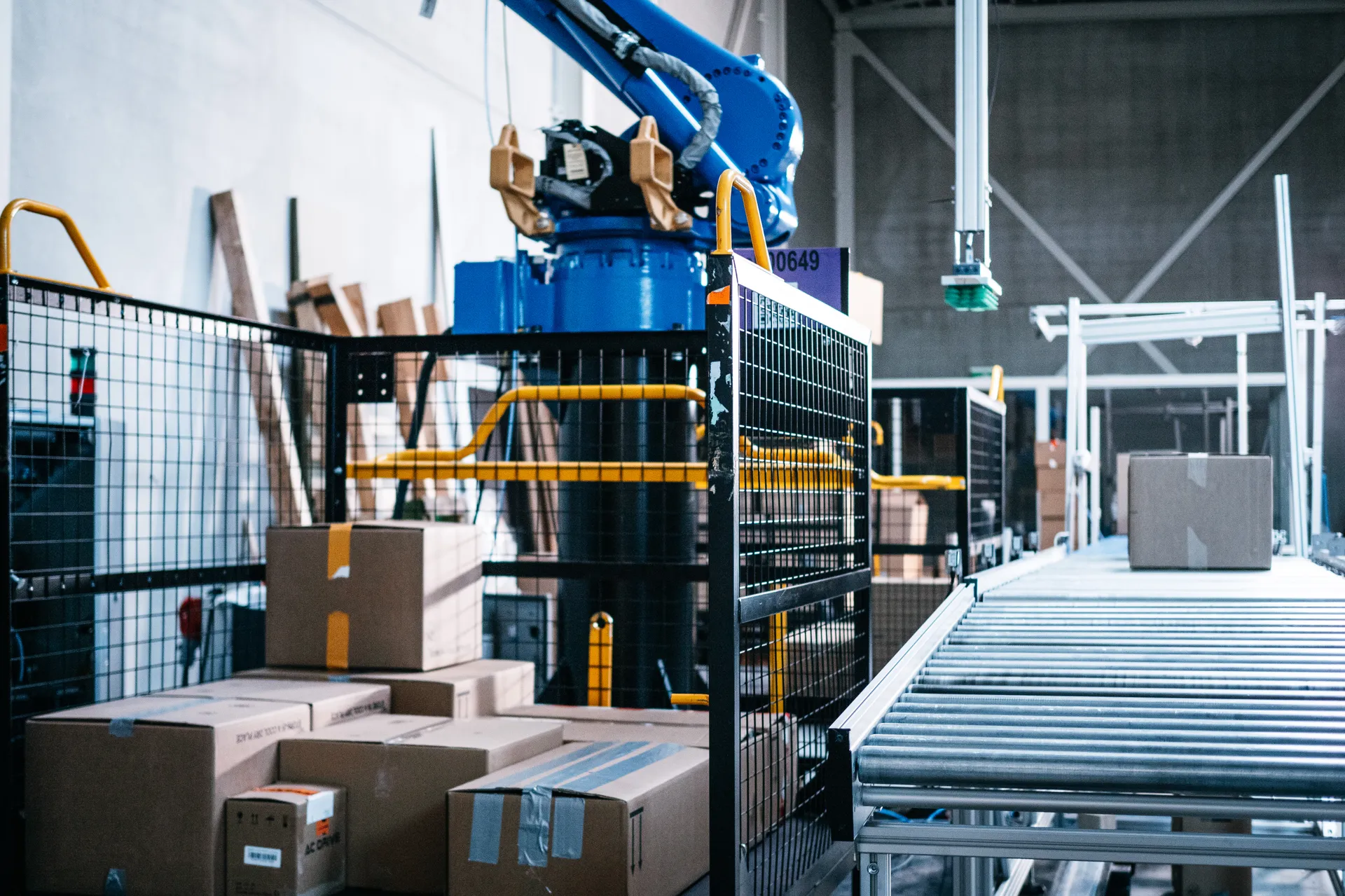
We automate what slows your production down. From the first test to a robot cell on your floor — with the robot that fits your process.




From a single operation to a complete cell. We start with your product, your people and your production floor.
Stacking cases, trays and bags · Bag handling and positioning
Loading CNC machines and presses · Workpiece carriers and transport carts
Powder coating · Wet painting
Blasting · Sanding
Traceable product identification · Marking curved surfaces
Recognising parts in unsorted bins · Picking and orienting
Visual inspection · Dimensional inspection
Robotic glue dispensing · Adhesive application in the required pattern
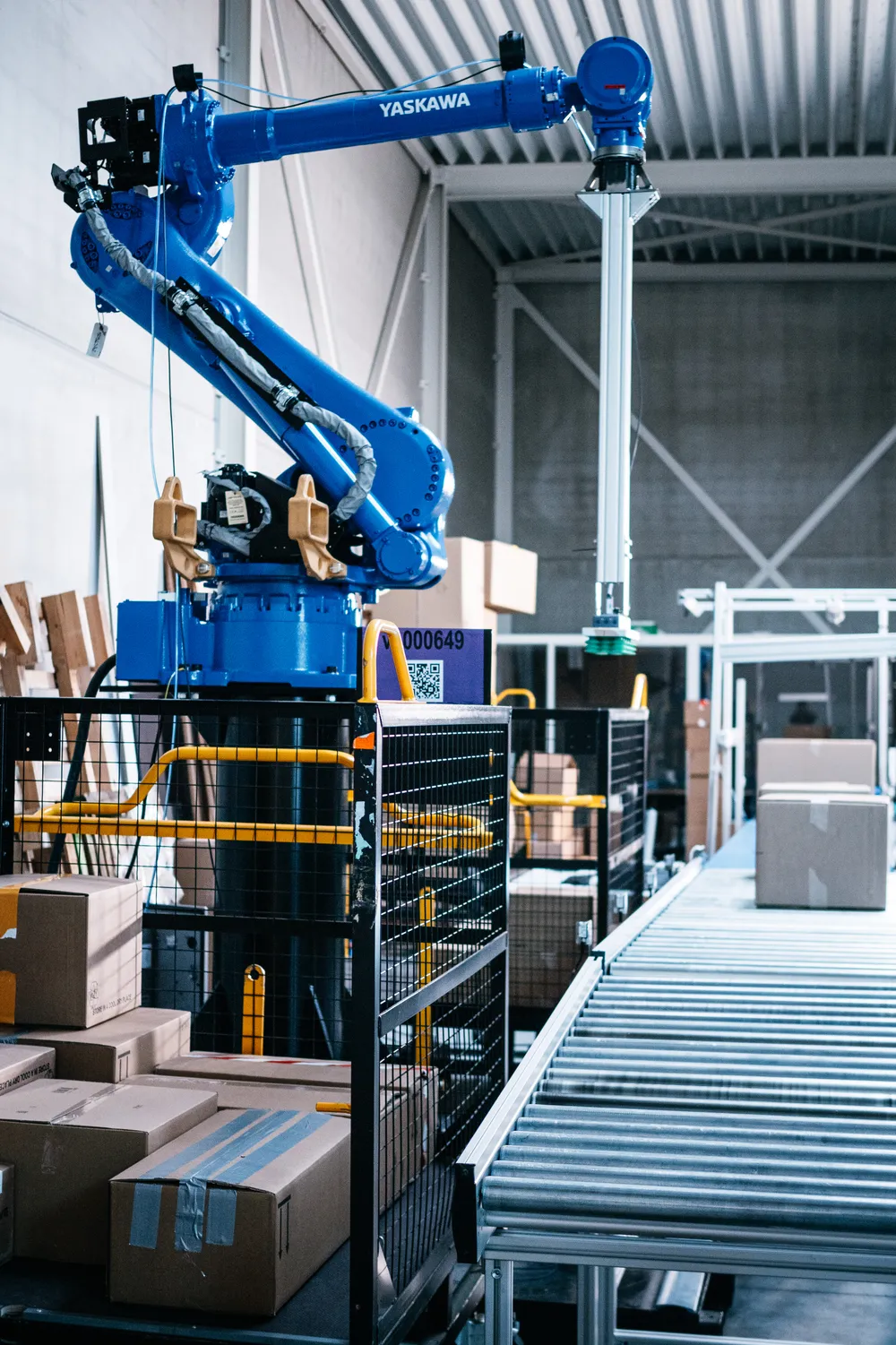
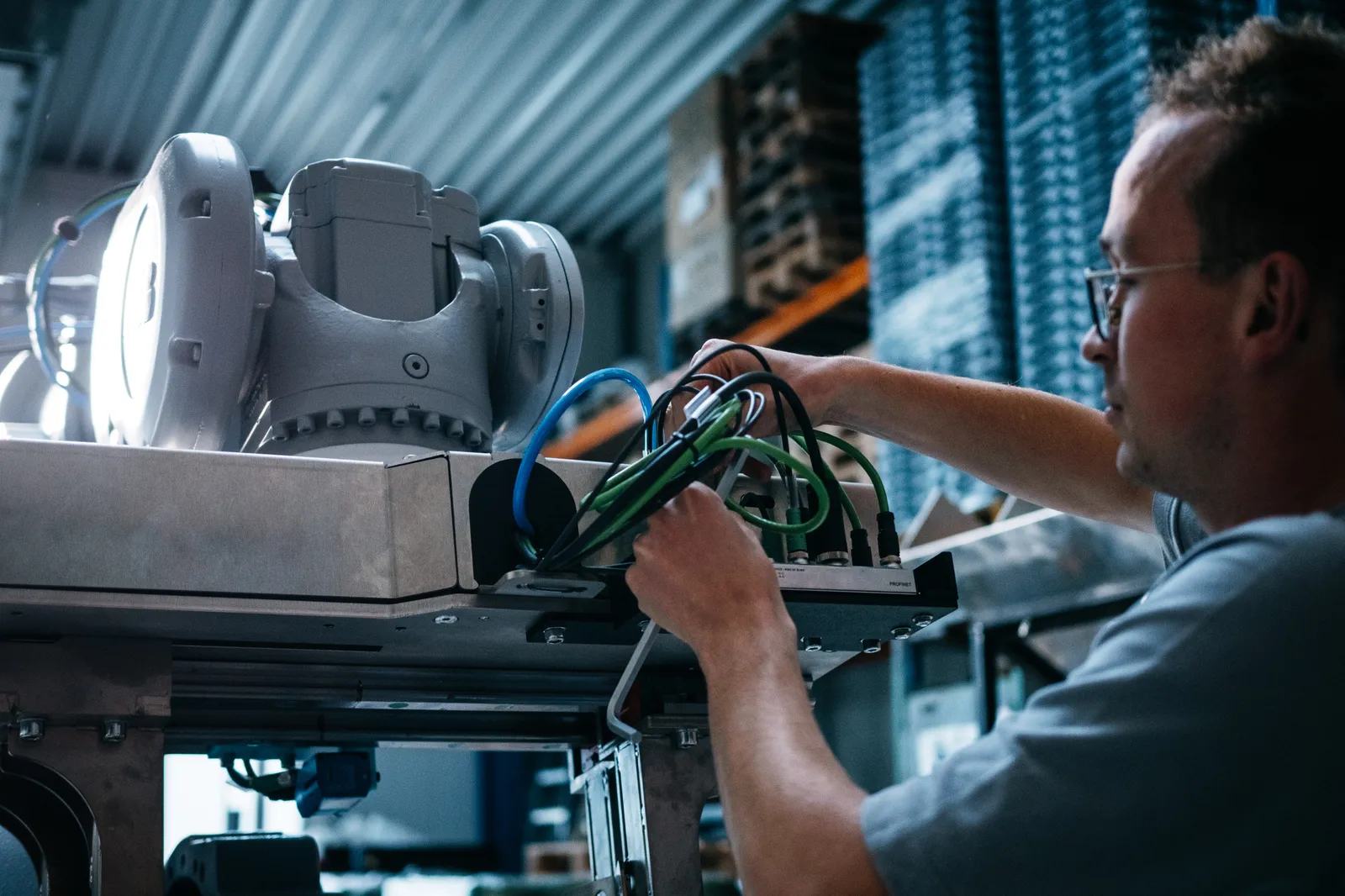
Before we design the cell, we simulate your application virtually. We assess reach, payload, robot movements and expected cycle time to select a suitable robot type and model. That selection becomes the starting point for the gripper, layout and detailed cell design.
A cobot is an industrial robot too. The right choice depends on the task and how people work alongside it.
We use virtual simulation to select the robot type and model for your application, independently of brand.
Discuss your applicationNot every process can be proven on paper. For complex questions, we propose a paid, limited-scope feasibility study. A proof of concept shows what works before you commit to a complete robot cell.
We test the critical operation using your parts and the variation in your production.
We analyse and present the results to you. With complete transparency about feasibility, limitations and what still needs attention.
We advise on the next step. Including when further automation is not the right choice.
A specific challenge or an early idea? Let’s talk it through.